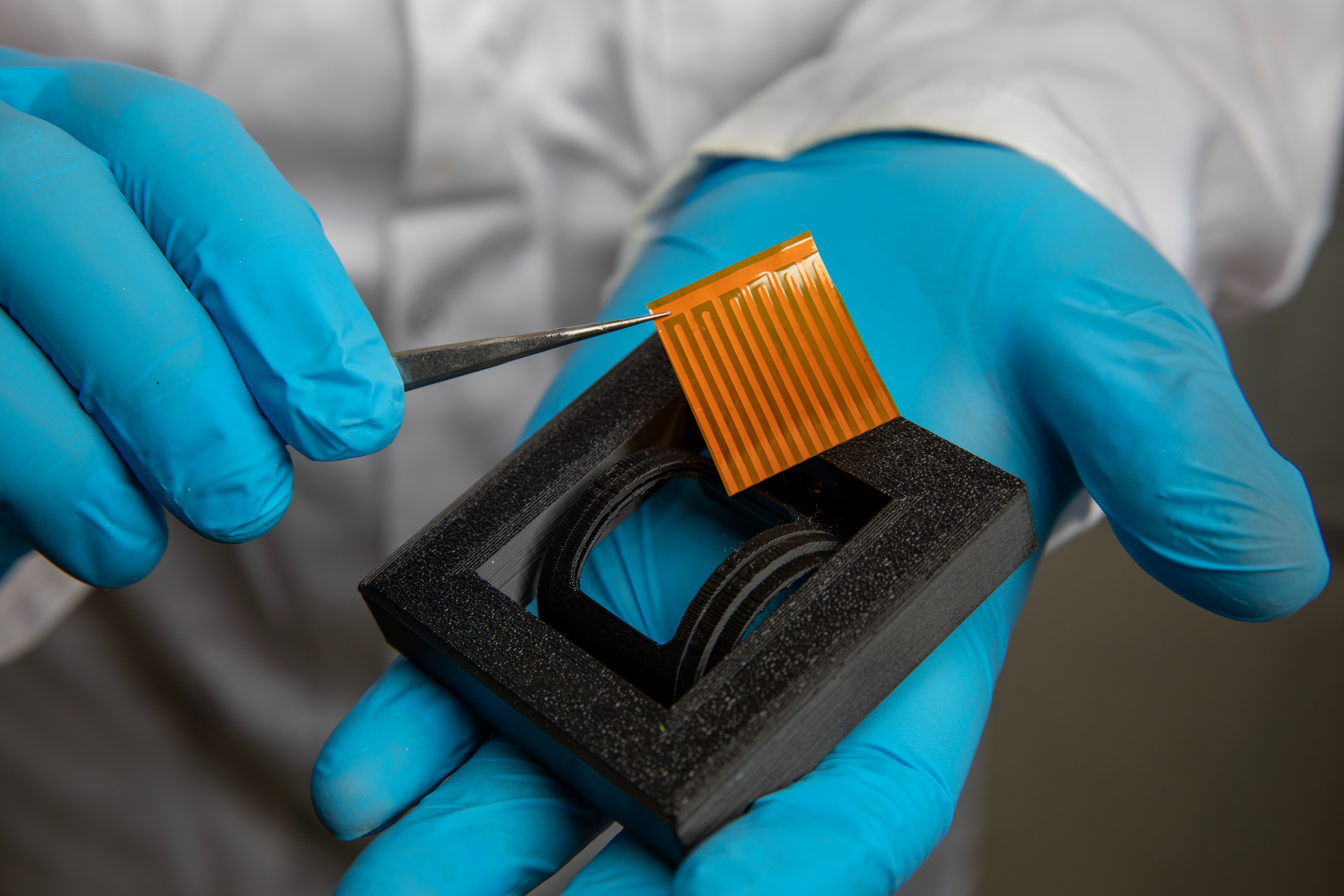
A close-up of a sample similar to those sent to the ISS to study their durability in harsh space conditions.

Leaner and Meaner: Materials Tested in Space Could Help Build More Space-Resilient Satellites

05.18.2026

Researchers at the Georgia Tech Research Institute (GTRI) and Georgia Institute of Technology (Georgia Tech) are sending experimental polymer materials to the International Space Station (ISS) as part of the MISSE-22 mission to better understand how they withstand real space conditions. 

Mounted outside the ISS and exposed to atomic oxygen, extreme temperatures, and radiation, the samples will later be returned to Earth for detailed analysis. The findings will help improve materials for future satellite constellations. The project brings together government, academic, and industry partners, including the Air Force Research Laboratory (AFRL), the University of Texas at El Paso (UTEP), California-based R&D firm Hedgefog Research Inc., DuPont de Nemours, and Aegis Aerospace. 

Read the full story on the Georgia Tech Research news site

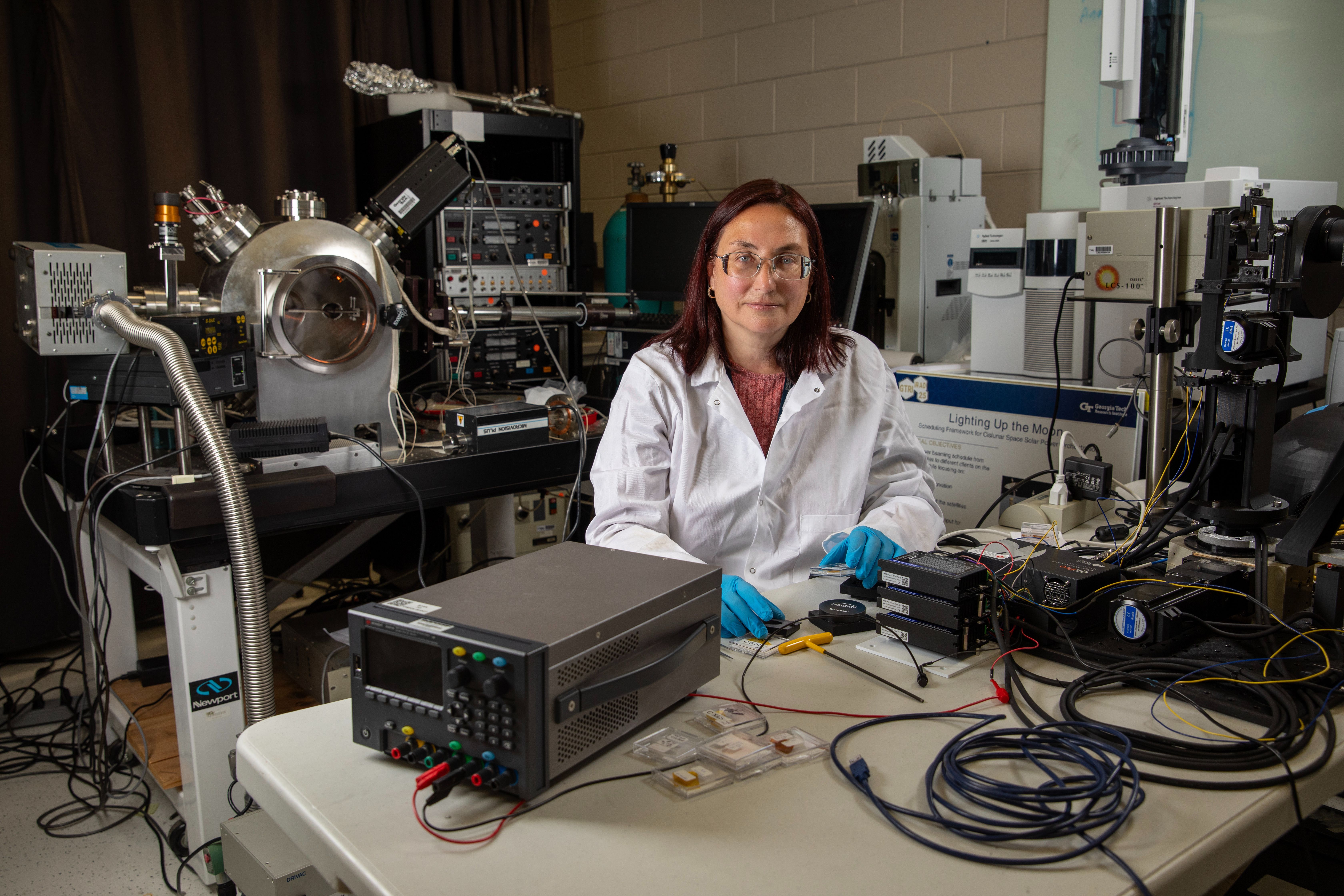
GTRI Senior Research Engineer and Principal Investigator Elena Plis and her team are sending new lightweight, research-grade polymers to the ISS for months of in-orbit exposure and later testing on Earth. Here, she is pictured in a laboratory at a GTRI facility in Atlanta, GA (Photo Credit: Sean McNeil, GTRI).

Newsletter

Sign up for monthly updates on GTRI’s research, activity, and more.

Related News

News stories
GTRI is supporting the Integrated Battle Command System (IBCS), which is currently the Army’s top air and missile defense modernization effort. IBCS will ultimately replace older air and missile defense command systems that were built to counter specific threats and applications.
News stories
By unlocking the ability to control and read the states of ions in a tiny spinning crystal, scientists have set the stage for a new way of performing analog quantum simulations that could offer insights into the complexities of many-body physics.
News stories
Ingenuity from a group of soldiers stationed at Fort Stewart – and help from engineers at the Georgia Tech Research Institute (GTRI) – has produced a possible solution for an issue that affects personnel at multiple U.S. Army facilities located in areas with high humidity and temperatures.