

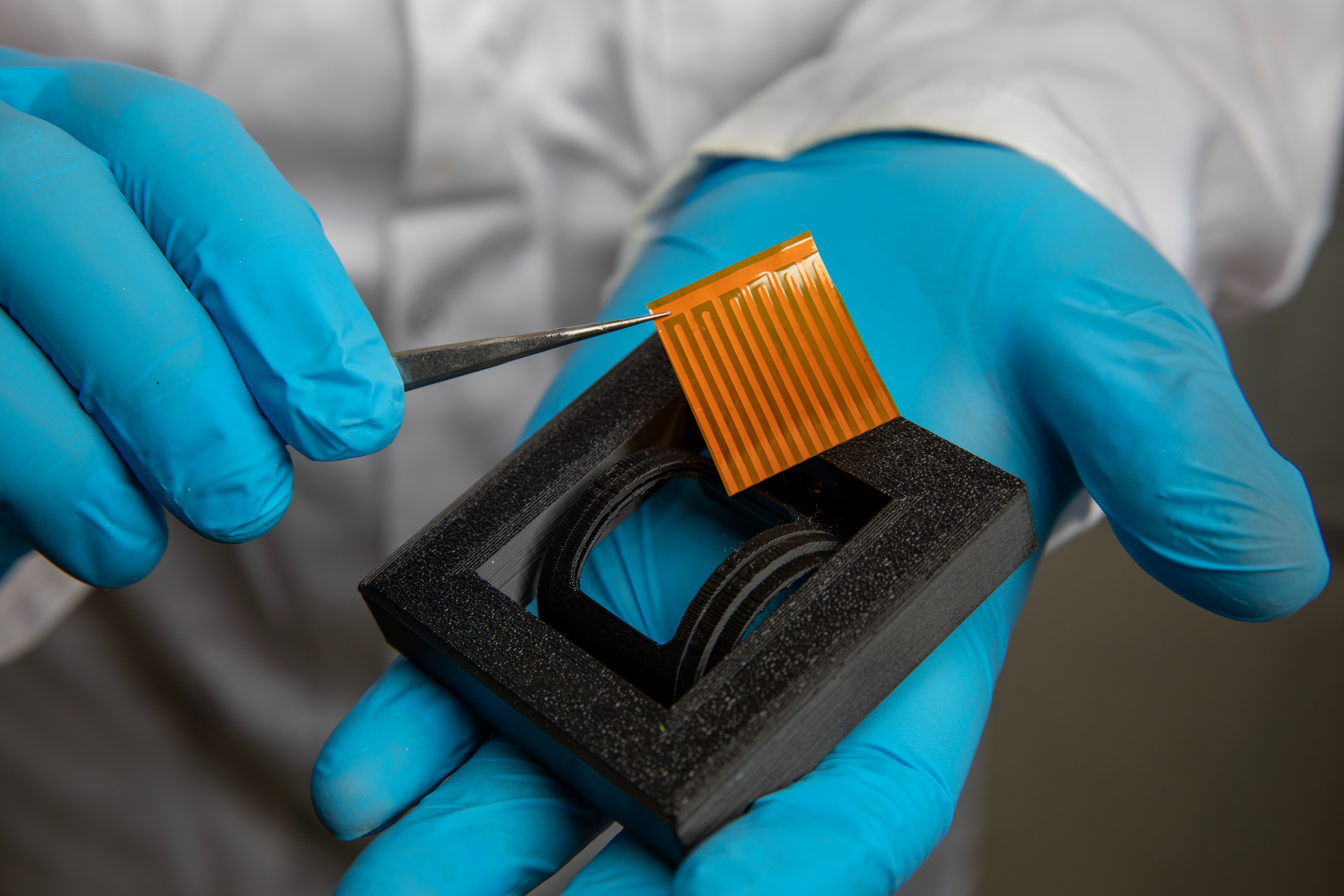
Researchers at the Georgia Tech Research Institute (GTRI) and Georgia Institute of Technology (Georgia Tech) are sending experimental polymer materials to the International Space Station (ISS) as part of the MISSE-22 mission to better understand how they withstand real space conditions.
Mounted outside the ISS and exposed to atomic oxygen, extreme temperatures, and radiation, the samples will later be returned to Earth for detailed analysis. The findings will help improve materials for future satellite constellations. The project brings together government, academic, and industry partners, including the Air Force Research Laboratory (AFRL), the University of Texas at El Paso (UTEP), California-based R&D firm Hedgefog Research Inc., DuPont de Nemours, and Aegis Aerospace.
Read the full story on the Georgia Tech Research news site.
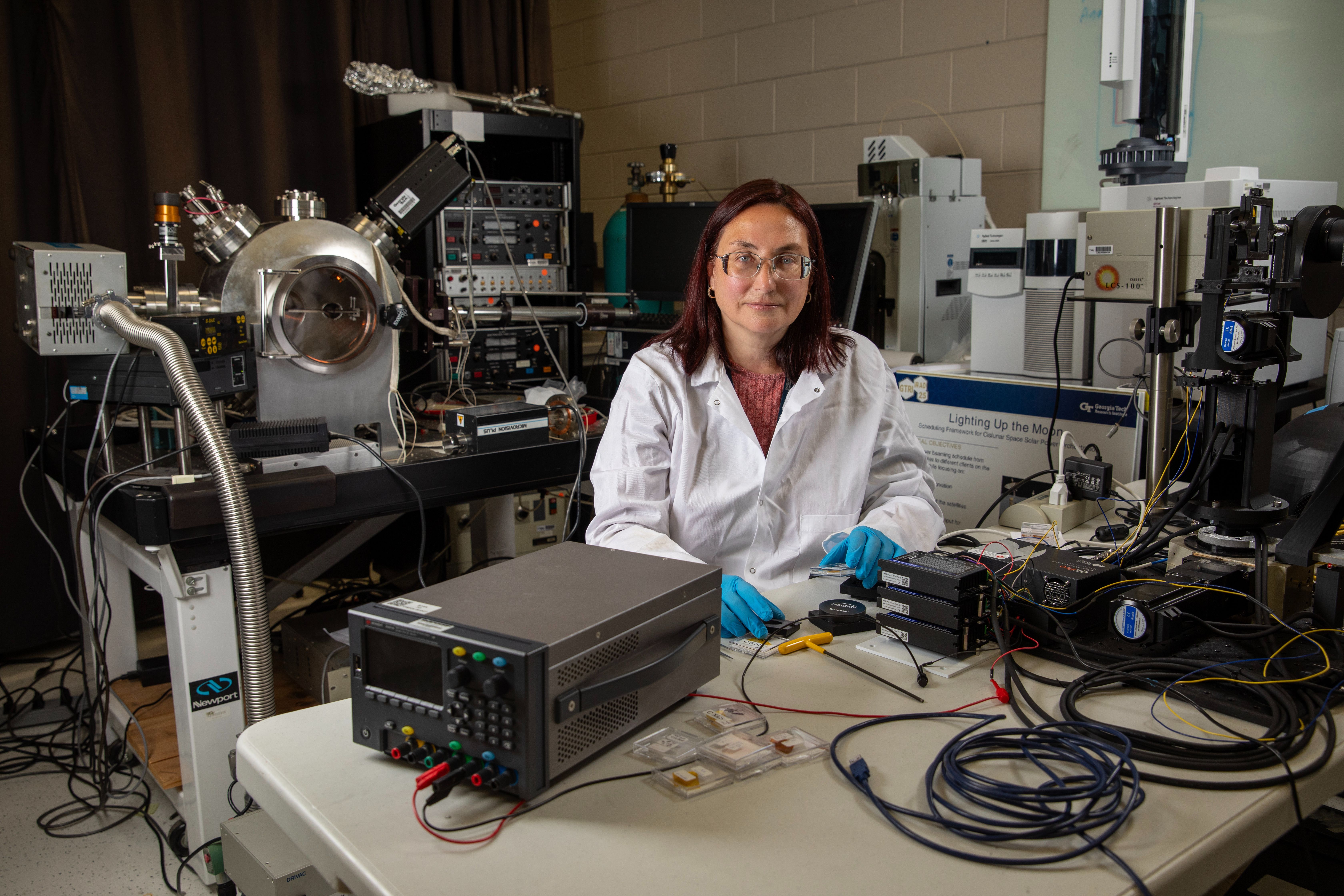

Related News

Trapped ions excited with a laser beam can be used to create entangled qubits in quantum information systems, but addressing several stationary pairs of ions in a trap requires multiple optical switches and complex controls.
Digitally-reconfigurable modular hardware and software building blocks designed to work together are key components of GTRI’s Software-Defined Configurable RF Array (COBRA) initiative, which is intended to facilitate rapid development of low-cost phased-array radar systems for ground, airborne, spaceborne, electronic warfare, communication, and other applications.