


E-cigarettes, also known as vapes, are battery-operated devices that heat a liquid that typically contains nicotine, an addictive substance. These devices are continually changing, with new flavors, novel device designs, and digital screens. Some of these e-cigarettes — sometimes called “smart vapes”— include built-in games and Bluetooth connectivity that have the potential to gamify the use of nicotine. Many of these devices are marketed online but cannot be easily monitored with existing data sources and methods.
A new study published July 9 in the journal Nicotine and Tobacco Research demonstrates how artificial intelligence (AI) can be used to automatically detect and classify new e-cigarette devices with screens. The study, led by Georgia Tech Research Institute (GTRI) scientists, in collaboration with the CDC Foundation, analyzed publicly available product images from online tobacco retailers.
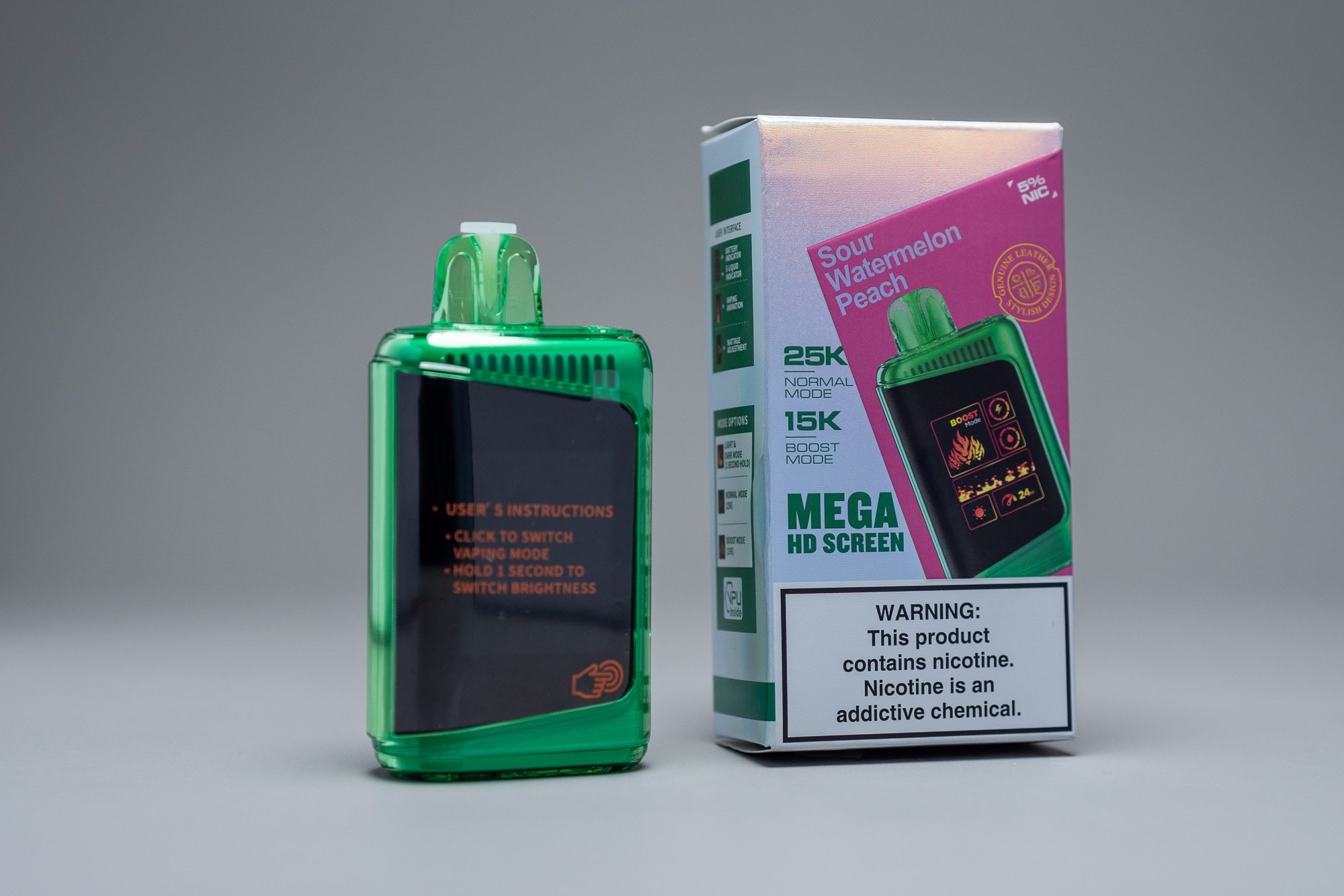
“Monitoring online e-cigarette marketing is like a game of Whack-A-Mole, with so many new products and features popping up,” said Kristy Marynak, PhD, Senior Director for Tobacco Control Initiatives at the CDC Foundation and a study author. “This study shows how machine learning techniques can shed light on the online e-cigarette marketplace and the vast quantities and types of e-cigarette products available.”
“Smart” Vapes Attract Youth and Young Adults
Vapes with digital screens are appealing to young people, underscoring the importance of monitoring emerging e-cigarette technologies and product features. According to a CDC Foundation study of a nationally representative cohort of youth and young adults, nearly a third of youth and young adults who use e-cigarettes use “smart” vapes.
AI Helps Classify E-Cigarettes More Efficiently
The GTRI team studied images containing e-cigarettes and other related tobacco products from an open-source dataset and augmented them with images obtained from five online sites selling e-cigarettes. An AI-based object detection model was trained on approximately 7,000 of those images and tested with 3,920 additional images to ensure accuracy. In total, 2,401 images were predicted by the object detection model to contain an e-cigarette.
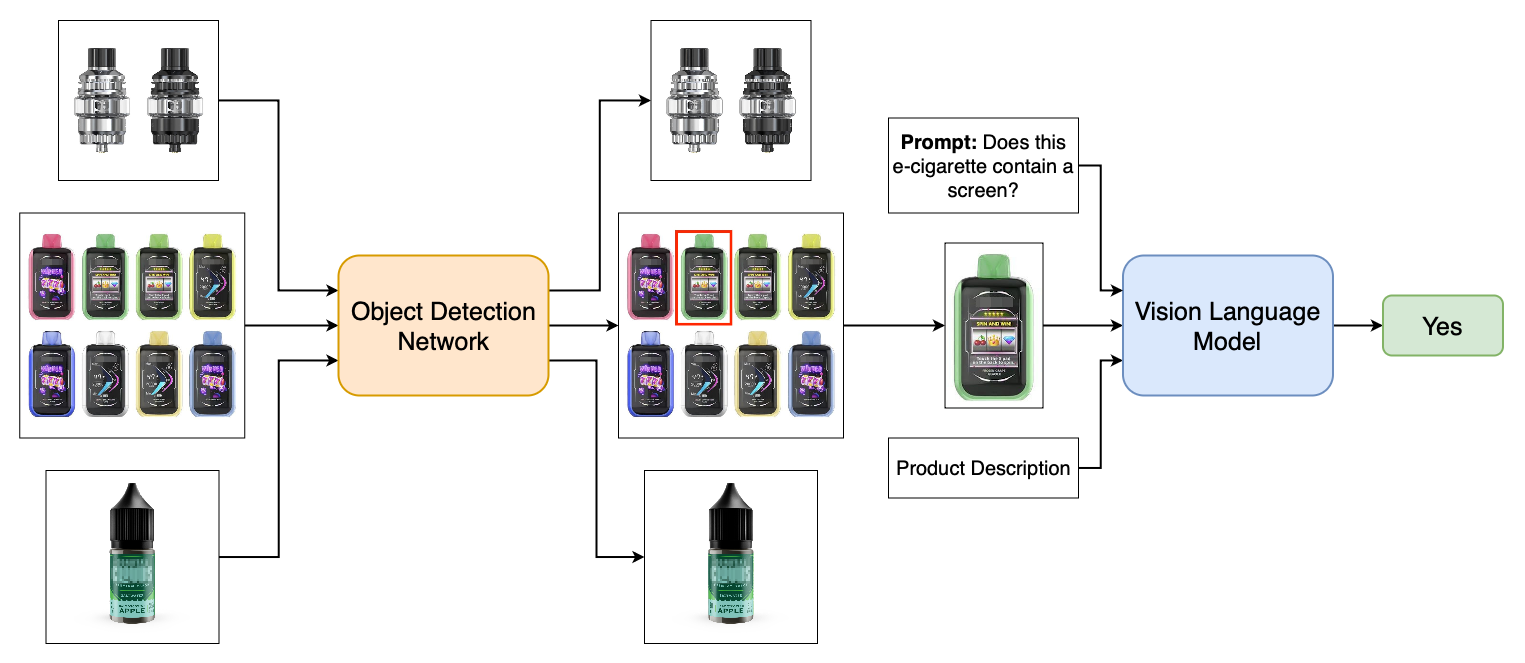
The researchers then used a vision-language model (VLM), a type of AI that combines large language models with computer vision to process both images and text simultaneously. The VLM analyzed the 2,401 images along with the text descriptions of e-cigarette devices to automatically determine if screens were present. Results were found to be more than 90% accurate.
“There are thousands of e-cigarette devices, and we have currently identified more than 60 websites selling them,” said Charity Hilton, a GTRI research scientist who leads the overall project. “Using AI techniques such as natural language processing, machine learning, and large language models, we’re now able to classify these products much more efficiently and repeatably.”
New Tool Will Provide Real-time Data for Public Health
Using what they’ve learned, GTRI and CDC Foundation researchers now plan to incorporate the AI-based process into a tool that will complement existing techniques as part of the CDC Foundation’s e-cigarette monitoring efforts.
“This tool gives the CDC Foundation a force multiplier to look at a vast swath of new products and keep up with the market trends and changing environment,” said Dr. Hunter Morera, a GTRI researcher and the study’s lead author. “With thousands of products going up monthly, traditional manual coding methods simply can’t keep up.”
The use of AI to capture and rapidly analyze e-cigarette data has the potential to transform how the tobacco product landscape and trends are monitored and understood. This will allow for more informed public health research, surveillance and decision-making.
“This study demonstrates that AI can systematically and efficiently identify novel features of emerging tobacco products, in this case the presence of screens on thousands of e-cigarette devices,” said Elisha Crane, MPH, a public health data scientist at the CDC Foundation and the study’s senior author. “This work serves as a case study of how these methods can be applied to enhance existing tobacco product monitoring and has the potential to provide real-time data to inform public health officials, policymakers, and regulatory agencies.”
Hilton hopes this study will help open the door for other AI applications in public health monitoring. “There’s definitely a lot of AI work going on, but it’s not necessarily being applied to public health issues,” she said. “We’d like to support public health agencies by applying a cutting-edge technology to the critical challenges they are addressing.”
Additional study authors include James Jun and Dianna King of GTRI, and Elizabeth Seaman Jones, PhD, from the CDC Foundation.
CITATION: Morera, H., Jun, J., Hilton, C., King, D., Seaman Jones, E. L., Marynak, K., & Crane, E. Automatic detection of e-cigarette screens using object detection and vision language models. Nicotine & Tobacco Research.
About GTRI
The Georgia Tech Research Institute (GTRI) is the nonprofit, applied research division of the Georgia Institute of Technology (Georgia Tech). Founded in 1934 as the Engineering Experiment Station, GTRI has grown to more than 3,000 employees, supporting eight laboratories in over 20 locations around the country and performing more than $964 million of problem-solving research annually for government and industry. GTRI's renowned researchers combine science, engineering, economics, policy, and technical expertise to solve complex problems for the U.S. federal government, state, and industry.
About CDC Foundation
The CDC Foundation is an independent nonprofit authorized by Congress to mobilize philanthropic partners to support the public health system, including the U.S. Centers for Disease Control and Prevention (CDC), in preventing and responding to threats to health. In this role, the CDC Foundation is focused on one priority: building catalytic, flexible and impactful partnerships—with corporations, philanthropies, individuals and organizations—to help improve the health and lives of people in all communities, everywhere.

Related News


