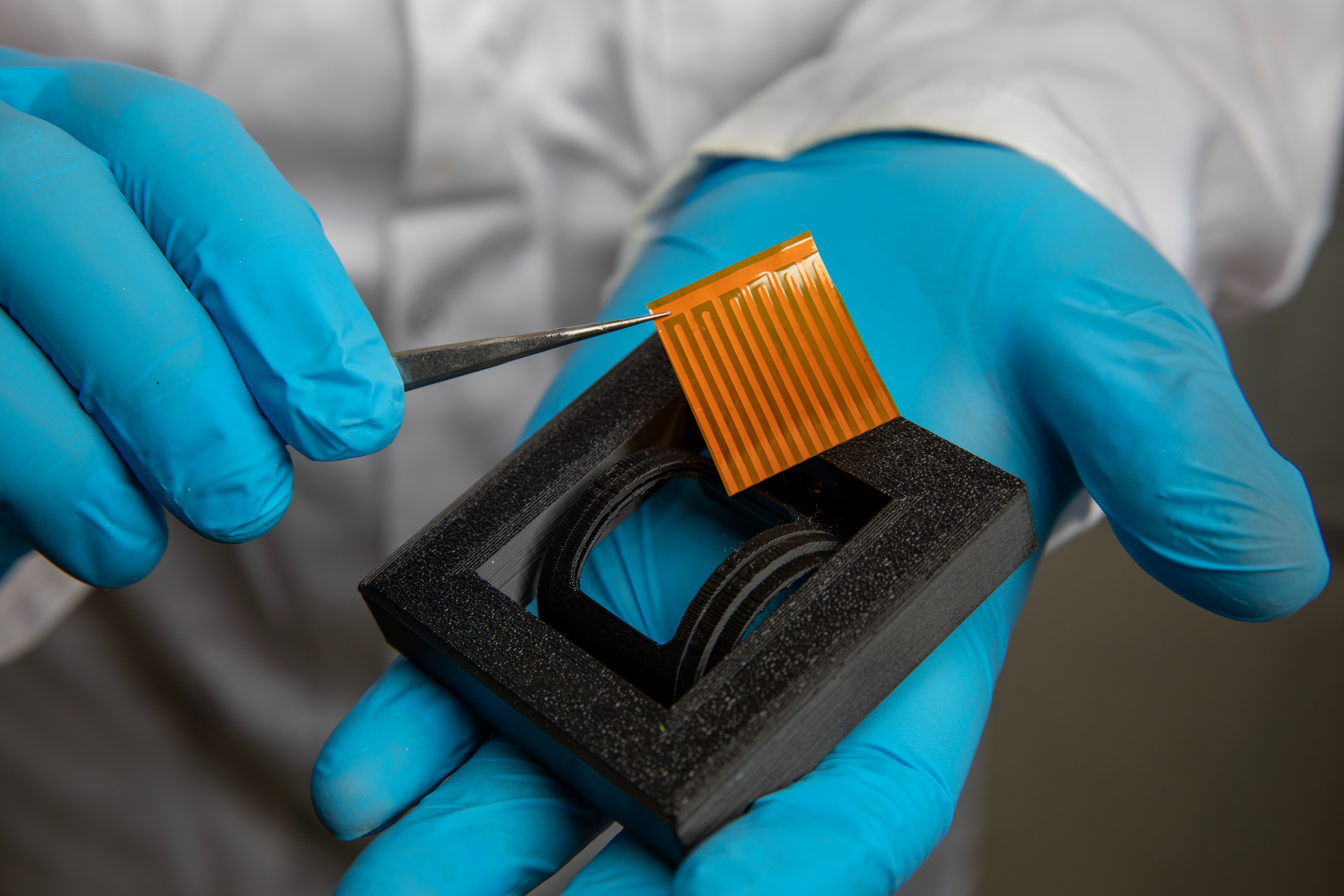
A close-up of a sample similar to those sent to the ISS to study their durability in harsh space conditions.

Leaner and Meaner: Materials Tested in Space Could Help Build More Space-Resilient Satellites

05.18.2026

Researchers at the Georgia Tech Research Institute (GTRI) and Georgia Institute of Technology (Georgia Tech) are sending experimental polymer materials to the International Space Station (ISS) as part of the MISSE-22 mission to better understand how they withstand real space conditions. 

Mounted outside the ISS and exposed to atomic oxygen, extreme temperatures, and radiation, the samples will later be returned to Earth for detailed analysis. The findings will help improve materials for future satellite constellations. The project brings together government, academic, and industry partners, including the Air Force Research Laboratory (AFRL), the University of Texas at El Paso (UTEP), California-based R&D firm Hedgefog Research Inc., DuPont de Nemours, and Aegis Aerospace. 

Read the full story on the Georgia Tech Research news site

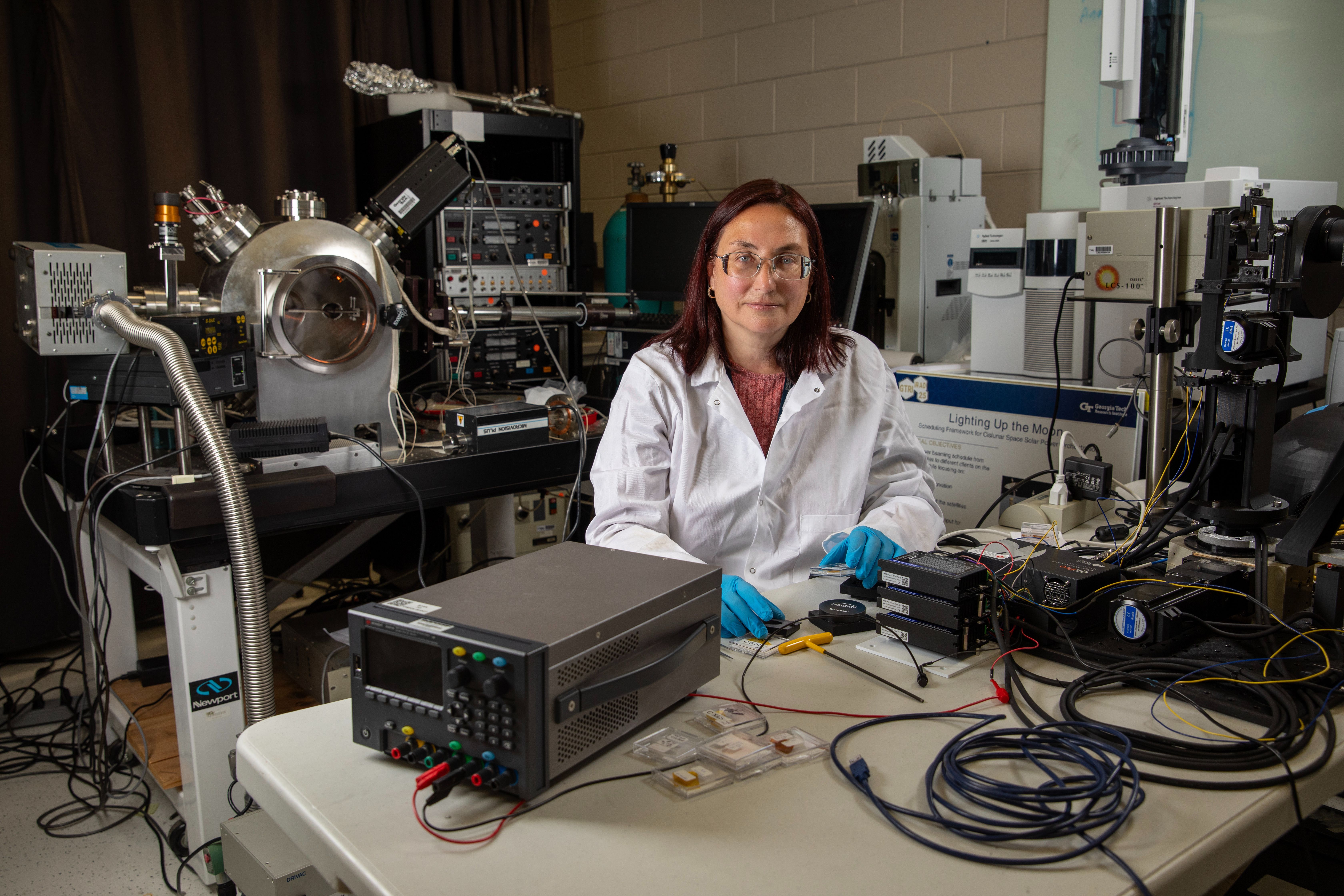
GTRI Senior Research Engineer and Principal Investigator Elena Plis and her team are sending new lightweight, research-grade polymers to the ISS for months of in-orbit exposure and later testing on Earth. Here, she is pictured in a laboratory at a GTRI facility in Atlanta, GA (Photo Credit: Sean McNeil, GTRI).

Newsletter

Sign up for monthly updates on GTRI’s research, activity, and more.

Related News

News stories
Georgia Tech Research Institute (GTRI) researched created COVID Central, a web app to help students, faculty, and staff check for symptoms of Covid-19, access links to important campus coronavirus resources, and track infection reports in the campus community.
News stories
The smartphones in everyone’s purse or pocket could soon become powerful tools in the effort to control coronavirus across Georgie Tech's campus. Georgia Tech Research Institute (GTRI) researchers evaluated NOVID, an exposure notification app, for privacy protections to make sure it doesn’t record personal information that could identify users – and for cybersecurity issues to make sure it protects the device.
News stories
Researchers at the Georgia Tech Research Institute (GTRI) have built two prototype chambers to evaluate PPE disinfection using different sources of ultraviolet (UV) light.